In case you couldn't make the last class (Danielle's Psych students had a clash), I will be offering a repeat extra class on THURSDAY 30th April at 12:50 in room 24.
In order to help you prepare for exams, here are brief reminders of each poem on UNISA's list. This is not a substitute for attending class, merely a reminder of some of the more salient points in each poem in order for you to complete a good general critical analysis in an exam situation.
*** This is a work in progress - keep checking back, as I post more on each poem ***
 MATTHEW ARNOLD (1822-1888) - Dover Beach
Things to look out for:
Pathetic fallacy, religious allegory, the pulsing sea-like rhythm, 'sound effects' in alliteration and assonance.

SHABBIR BANOOBHAI (1949 - ) - When the First Slave Was Brought to the Cape
Things to look out for:
Form (particularly lack of capitalisation), positivity and tenses, blurring the boundaries between the possible and impossible through imagery, freedom of the spirit, the possiblities of refiguring the self.
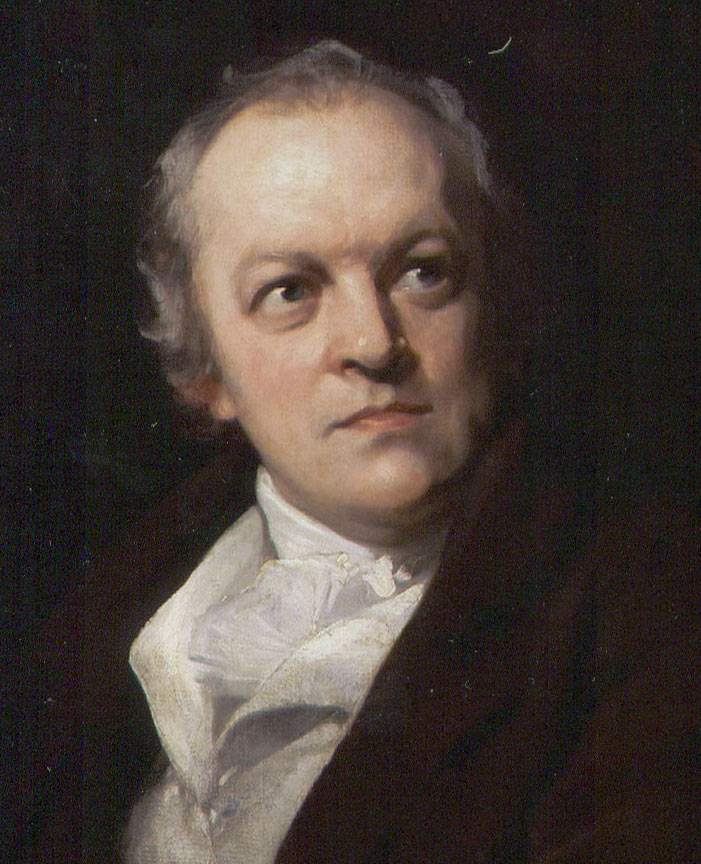
WILLIAM BLAKE (1757-1827) - London
Things to look out for:
Mimesis in the endless, heavy rhythm, repetition, imagery, 'sound effects' in alliteration and assonance.
Seeing as they are only a couple of decades apart, it's particularly interesting to contrast Blake's representation of London with Wordsworth's in Composed on Westminster Bridge.

ROY CAMPBELL (1901-1957) - The Zulu Girl
Things to look out for:
Othering, association of women with the land/nature, foreshadowing of ominous future.
 HART CRANE (1899 - 1932) - My Grandmother's Love Letters
Things to look out for:
Imagery and its implications, sense of female lineage and desire, sexual/familial positioning, the significance of line breaks, water/memory imagery.
 ROBERT FROST (1874-1963) - Mending Wall
Things to look out for:
Rhythm and form as examples of mimesis, register, literal and figurative meanings.
 FHAZEL JOHANNESSE - A Young Man's Thoughts Before June the 16th
Things to look out for:
Form (particularly the lack of capitalisation and punctuation), youthful, romanticised notions of martyrdom, the childlike - though not childISH - speaking voice, 'sound effects' produced by alliteration and assonance.

JOHN KEATS (1795-1821) - When I Have Fears That I May Cease to Be
* Commentary coming *

PHILIP LARKIN (1922 - 1985) - Talking in Bed
This is Larkin's intricately structured examination of a dying relationship. Look at RHYME STRUCTURE, IMAGERY that reflects an uneasy relationship and the ironies of the title and FORM. Remember our discussion of the significance of the breakdown in rhyme and formal structure from the 'clean' first stanza through to the increasingly messy structure breakdown that occurs further on. This is can be seen as an example of mimesis - mirroring the breakdown in the relationship. Recall the significance of the number 3 in this poem - the odd number, three's a crowd etc. Also consider expectation ("should be the easiest") versus reality ("but more and more time passes silently"). Focus on those last, paradoxical "words at once true and kind/or not untrue and not unkind."
This is Larkin's intricately structured examination of a dying relationship. Look at RHYME STRUCTURE, IMAGERY that reflects an uneasy relationship and the ironies of the title and FORM. Remember our discussion of the significance of the breakdown in rhyme and formal structure from the 'clean' first stanza through to the increasingly messy structure breakdown that occurs further on. This is can be seen as an example of mimesis - mirroring the breakdown in the relationship. Recall the significance of the number 3 in this poem - the odd number, three's a crowd etc. Also consider expectation ("should be the easiest") versus reality ("but more and more time passes silently"). Focus on those last, paradoxical "words at once true and kind/or not untrue and not unkind."

OSWALD MTSHALI (1940 - ) - Men in Chains
Do NOT get this confused with Sepamla’s The Loneliness Beyond!
Look at:
Dehumanising animal imagery vs humanising sun imagery (personification) and the implications of this, anticlimax of doomed prophesy in final line.
 EDNA ST VINCENT MILLAY (1892 - 1950) - I, Being Born a Woman and Distressed
Things to look out for:
Subversive use of the sonnet form, line breaks, feminist perspective.
 JOHN MILTON (1608-1674) - On His Blindness
Milton's sonnet addressing his encroaching blindness. Although it is never good to conflate poet and speaker, in this case we can say that the speaker IS Milton himself. This is a very personal testament to his struggle with faith and purpose after failing eyesight has called into question his life choices. Look at STRUCTURE (particulars of Petrarchan sonnet and its typical association with love), ENJAMBMENT and its effect on the sense of RHYME, IMAGERY (particularly dark/light) and PUNS/WORD PLAY. Recall the Biblical parable of the Talents.

ESSOP PATEL (1943 - 2007) - In the Shadow of Signal Hill
A short, yet powerful call for violent revolution against Apartheid laws. Look at the IMAGERYand its IMPLICATIONS, as well as the TITLE and lack of PUNCTUATION/CAPITALISATION. Remember our geography quiz? District 6 is associated with forced removals, Langa is a township near the airport (where many black evicted residents might have gone) and Robben Island (where the "heroes" call from) is easily visible from Signal Hill. Signal Hill itself is famous for the noonday gun - a military symbol of the passing of time. What kind of alternate militant symbols of passing time are being called for in the poem?
SIPHO SEPAMLA (1932 - 2007) - The Loneliness Beyond
Do NOT get this one confused with Motshali’s Men in Chains!
Do NOT get this one confused with Motshali’s Men in Chains!
Things to look out for:
Look at IMAGERY (particularly animal/human contrasts and the themes of people's lack of individuality. Ask yourself whether, in the last few lines, there might be a subtle sense of forboding.
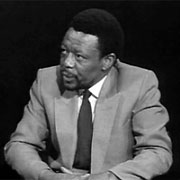
MONGANE SEROTE (1944 - ) - Alexandra
Things to look out for:
The speaker's inner child-voice that changes register, regression into childhood to parallel helplessness, imagery, continuous play between person/place (Alexandra as woman’s name and Alexandra as township).
Things to look out for:
The speaker's inner child-voice that changes register, regression into childhood to parallel helplessness, imagery, continuous play between person/place (Alexandra as woman’s name and Alexandra as township).
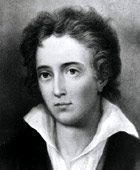
PERCY SHELLEY (1792-1822) - Ozymandias
Look at form, as well as line breaks. Notice and comment on the 'story within a story' approach.
Look at form, as well as line breaks. Notice and comment on the 'story within a story' approach.
 WOLE SOYINKA (1934 - ) - Capitol
A scathing political statement against the capitalist trade of a country's (and, thus, people's) access to basic natural resources. This poem is replete with PUNS ("germ", "dough", "tender", "sad"). Look also for basic contrast in IMAGERY (happy, smiling faces to sadness, embers to ashes etc).
 STEPHEN WATSON (1955 - ) - The Rain That is Male
It's important to recognise that this poem is a poetic interpretation and translation of the Bleek and Lloyd Collections, whcih are, themselves, translations of !Xam narratives and myths. that means that the politics of this piece are pretty fascinating, given your course preoccupation with 'selves and others'.
Things to look out for:
Form, male/female binaries.
 WILLIAM WORDSWORTH (1770 - 1850) - Composed Upon Westminster Bridge, Spetember 3, 1802
Things to look out for:
Unusual figuration of the city/culture as feminine (and nature as masculine), extended metaphor of London as a beautiful woman, use of sonnet form, unusual Romantic extolling of the virtues of the city as pseudo-pastoral space.

William Butler Yeats ( 1865-1939) - The Second Coming
Things to look out for:
Image of spirals, revolution and thwarted communication, apocalyptic religious imagery, 'sound effects' in alliteration and assonance.


 Posts

